Digital advertising may dominate modern mortgage marketing conversations, but printed flyers still have a practical role in helping mortgage professionals reach local homeowners and prospective buyers. A well-designed flyer can introduce a mortgage broker to a neighbourhood, explain a financing option, promote an educational event, or encourage borrowers to book a consultation.
However, distributing thousands of generic flyers featuring interest rates and contact details is not a marketing strategy. The message needs to connect with a specific borrowing situation, provide useful information, and explain why someone should contact you.
For Canadian mortgage professionals, mortgage marketing flyers work best when they support a broader marketing system involving local visibility, educational content, digital landing pages, and consistent follow-up.
This guide explains how to create effective mortgage flyers, choose appropriate formats, develop campaign ideas, distribute materials strategically, and measure whether your investment generates meaningful business opportunities.
Why Mortgage Marketing Flyers Still Matter in Canada
Mortgage decisions are closely connected to major life events. Purchasing a first home, refinancing an existing property, approaching a mortgage renewal, or accessing home equity can prompt homeowners to seek professional advice.
The challenge is reaching borrowers when that need becomes relevant.
Search advertising can reach consumers who are already researching mortgage products. Flyers serve a different purpose. They can introduce your services to homeowners before they actively begin searching, or reinforce your presence in communities where you want to build recognition.
Consider a mortgage broker serving homeowners in Mississauga. Instead of distributing generic advertisements throughout the Greater Toronto Area, the broker could develop a campaign explaining what homeowners should review before accepting a mortgage renewal offer.
The flyer could direct recipients to an educational landing page where they can learn about renewal options or request a consultation.
This approach gives the marketing material a clear purpose beyond displaying a business name.
Canada Post offers Neighbourhood Mail services that allow businesses to select delivery areas using geographic and demographic characteristics. The service supports flyers, cards, and self-mailers, making neighbourhood-level campaigns a practical distribution option.
The important distinction is that distribution creates exposure, not guaranteed demand. Results depend on the relevance of the audience, quality of the message, clarity of the offer, and effectiveness of the follow-up process.
What Makes Mortgage Marketing Materials Effective?
Effective mortgage marketing materials answer three questions almost immediately: Who is this for? Why should the recipient care? What should they do next?
A flyer that simply says “Best Mortgage Rates Available” provides little meaningful information. It does not identify the intended audience, explain the service, or communicate what makes the broker useful.
A more informative message might read:
“Mortgage Renewal Coming Up? Review Your Options Before Accepting Your Lender’s Offer.”
This introduces a recognizable situation and encourages homeowners to consider a relevant financial decision.
Strong mortgage advertising materials generally share several characteristics.
A Clear Message That Addresses One Borrower Need
Every flyer should focus on one primary subject.
A first-time homebuyer campaign should explain how the broker helps people prepare for a purchase. A refinancing campaign should discuss reviewing existing mortgage arrangements and understanding potential costs. A renewal campaign should emphasize evaluating options before the current term ends.
Trying to promote renewals, refinancing, investment mortgages, first-time purchases, and private lending on the same small flyer can overwhelm readers.
A focused message is easier to understand and creates a clearer reason to respond.
A Professional Design That Builds Credibility
Mortgage financing involves sensitive financial decisions. Promotional materials should reflect the professionalism borrowers expect from someone handling those decisions.
Use a consistent visual identity, readable typography, sufficient spacing, and relevant imagery.
Avoid overcrowding the design with multiple offers, competing headlines, excessive icons, or decorative elements that distract from the message.
The goal is not to make the flyer appear expensive. It is to make the information accessible, trustworthy, and easy to act upon.
A Specific and Relevant Call to Action
A call to action should reflect the reader’s situation.
“Book a Mortgage Renewal Review” communicates more clearly than “Contact Us Today” because it describes the benefit of taking the next step.
Other appropriate calls to action may include scheduling a consultation, requesting information about refinancing, or accessing a first-time homebuyer guide.
Avoid suggesting that an initial consultation guarantees approval, lower payments, or a particular mortgage rate.
Accurate Business and Licensing Information
Canadian mortgage advertising rules vary by province and the type of mortgage professional involved.
For example, Ontario’s Financial Services Regulatory Authority of Ontario (FSRA) requires public-facing mortgage advertising to identify the authorized brokerage and its licence number. When an individual broker or agent is advertised, additional licensed-name and title requirements apply.
These details should be incorporated into the design from the beginning rather than squeezed into unreadable text during the final review.
10 Creative Mortgage Marketing Ideas for Flyers
A good flyer campaign begins with the borrower’s circumstances, not the printing format.
Mortgage professionals can develop different messages for first-time purchasers, existing homeowners, property investors, and people considering their borrowing options.
The following ideas can be adapted to Canadian markets, subject to the services offered and applicable advertising requirements.
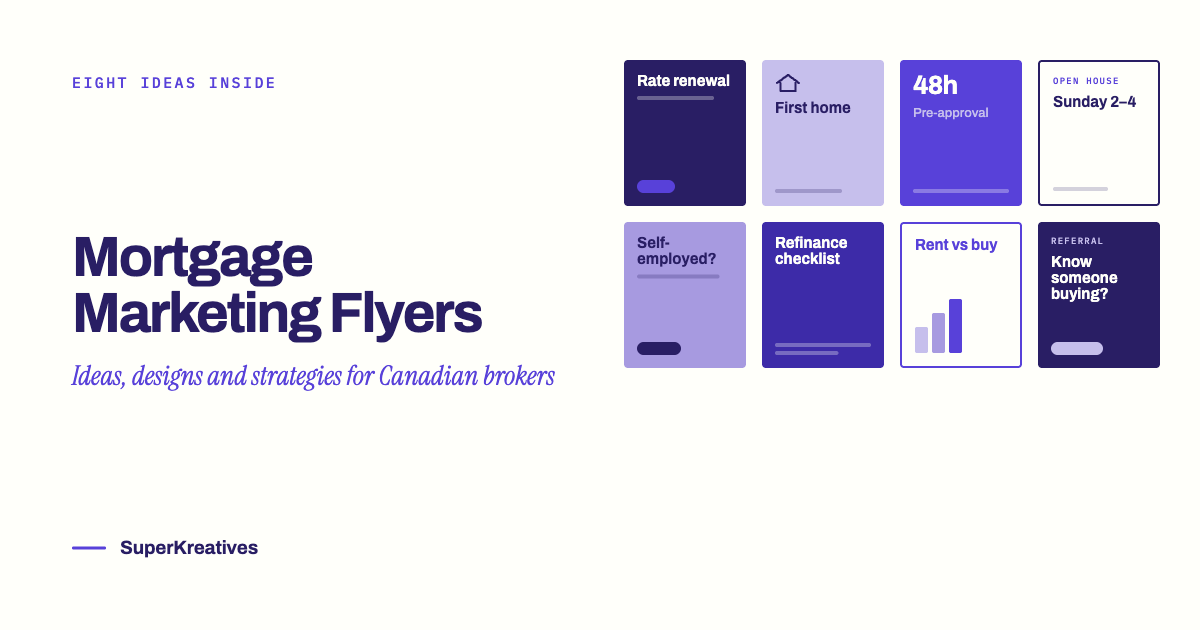
1. Mortgage renewal reminder flyer

Focus on homeowners approaching the end of their mortgage term. Explain why reviewing an upcoming renewal can be worthwhile, including payment expectations, mortgage features, and switching considerations. Encourage recipients to schedule a renewal discussion rather than suggesting they will necessarily secure a lower rate.
2. First-time homebuyer information flyer
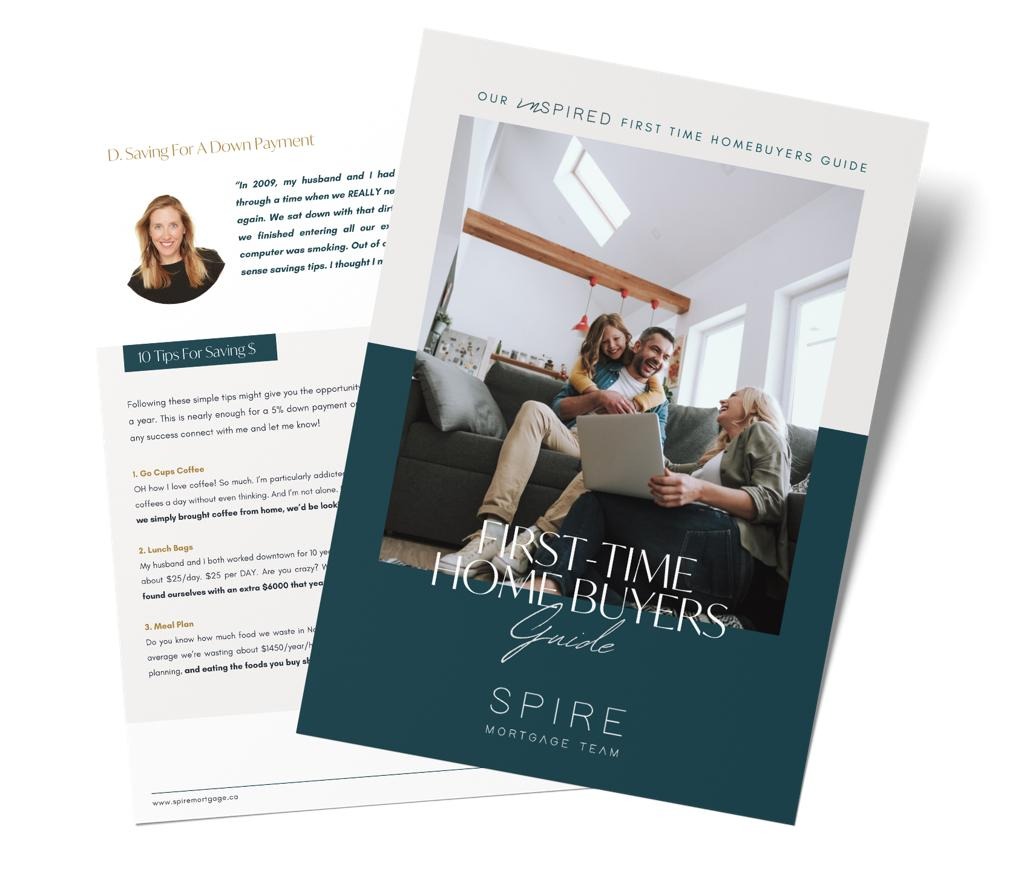
Address questions about down payments, pre-approvals, closing costs, and mortgage qualification. A headline such as “Buying Your First Home? Understand Your Financing Options” provides a helpful starting point. Direct interested buyers to a detailed educational resource or introductory consultation.
3. Mortgage refinancing flyer
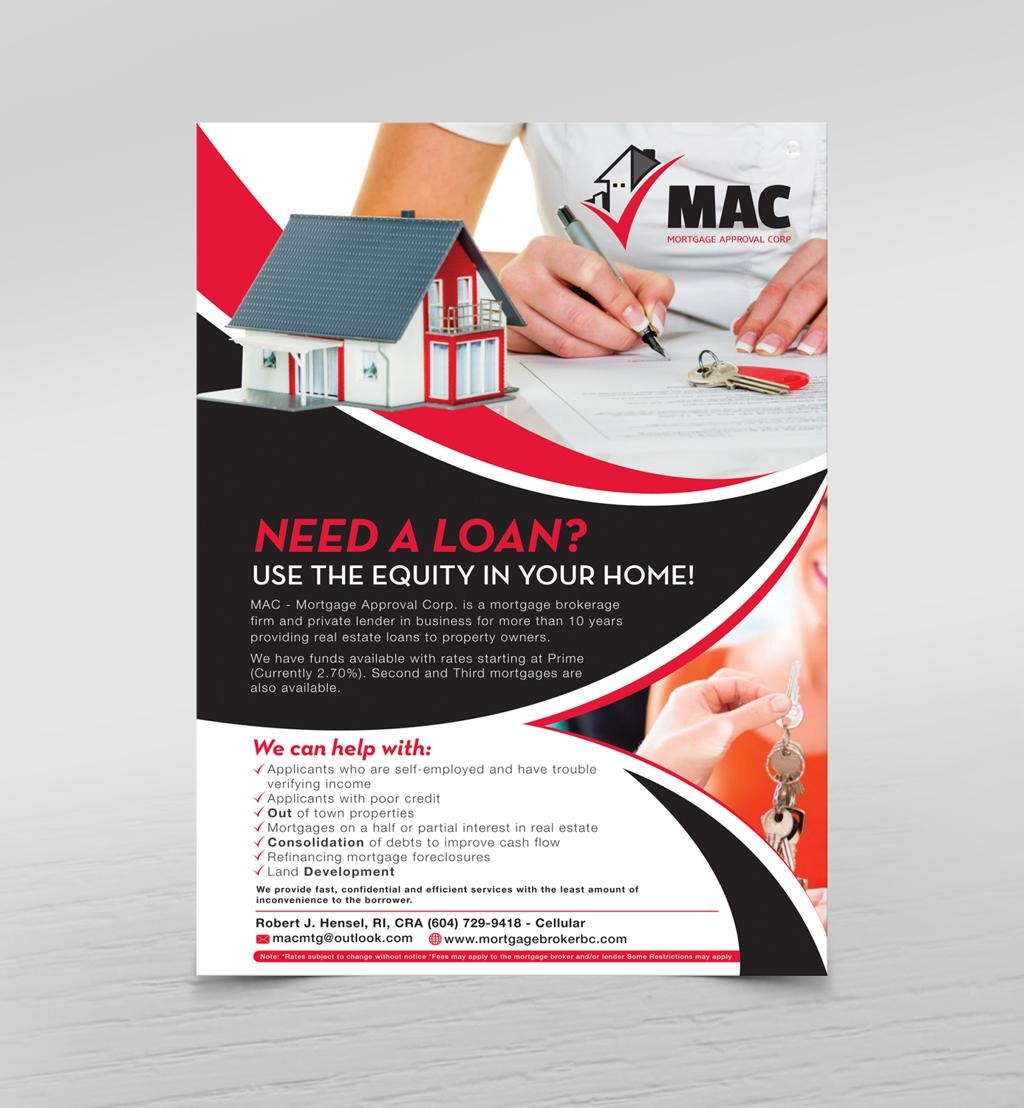
Explain why homeowners sometimes review refinancing, such as debt restructuring, renovation financing, or changes in their financial circumstances. Mention that refinancing can involve penalties, fees, and additional borrowing costs. This makes the communication informative rather than presenting refinancing as automatically beneficial.
4. Real estate open house flyer
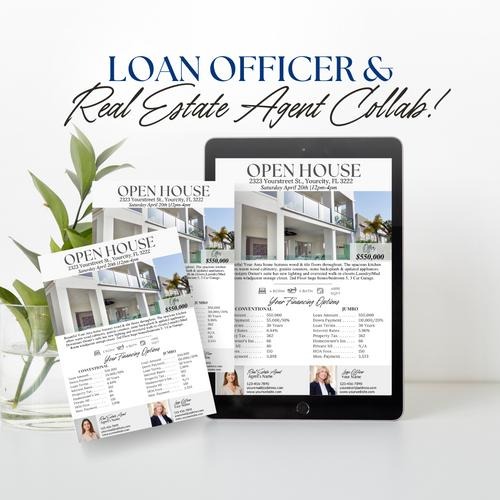
Collaborate with real estate professionals to provide general financing information at suitable property events. The material could explain the distinction between mortgage pre-approval and final approval, or identify financial preparations prospective buyers should consider.
5. Homebuyer workshop flyer

Promote an educational session covering mortgage basics, down payment planning, borrowing terminology, or renewal considerations. Include the actual session date, location, organizer information, registration details, and any relevant eligibility conditions.
6. Mortgage checklist flyer
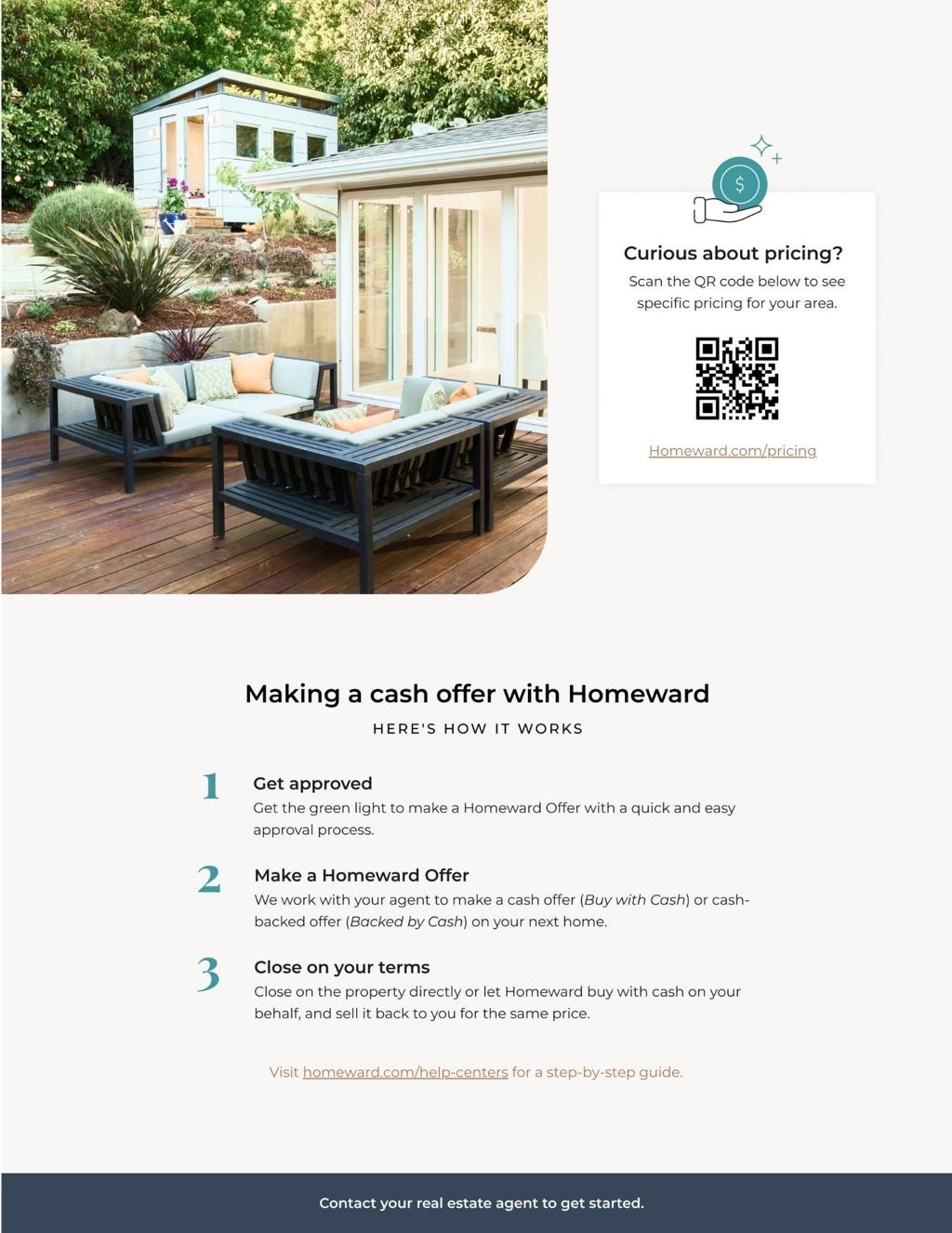
Offer a useful resource, such as a mortgage renewal preparation checklist or a guide to common homebuying expenses. A QR code can direct readers to the full resource. The flyer should provide enough information to demonstrate value even before the recipient scans it.
7. Self-employed borrower flyer
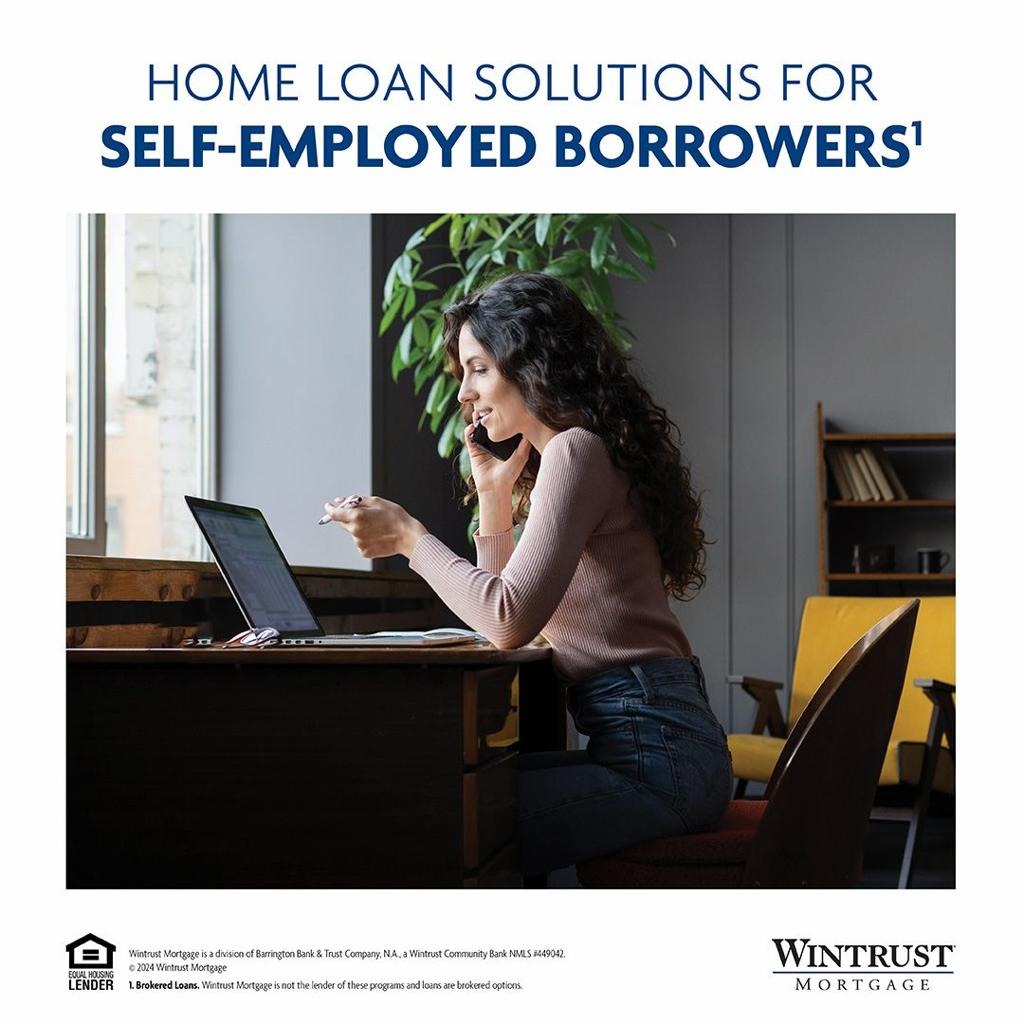
Speak to business owners, contractors, and self-employed professionals who may have questions about income documentation or lender qualification standards. Explain the importance of financial records and individual assessments without promising approval.
8. Home equity and retirement options flyer

Develop an educational flyer explaining financial considerations for older homeowners. Where reverse mortgages are relevant, discuss how they work, possible costs, and alternatives. Use respectful, readable language that supports informed decision-making.
9. Neighbourhood-specific mortgage flyer
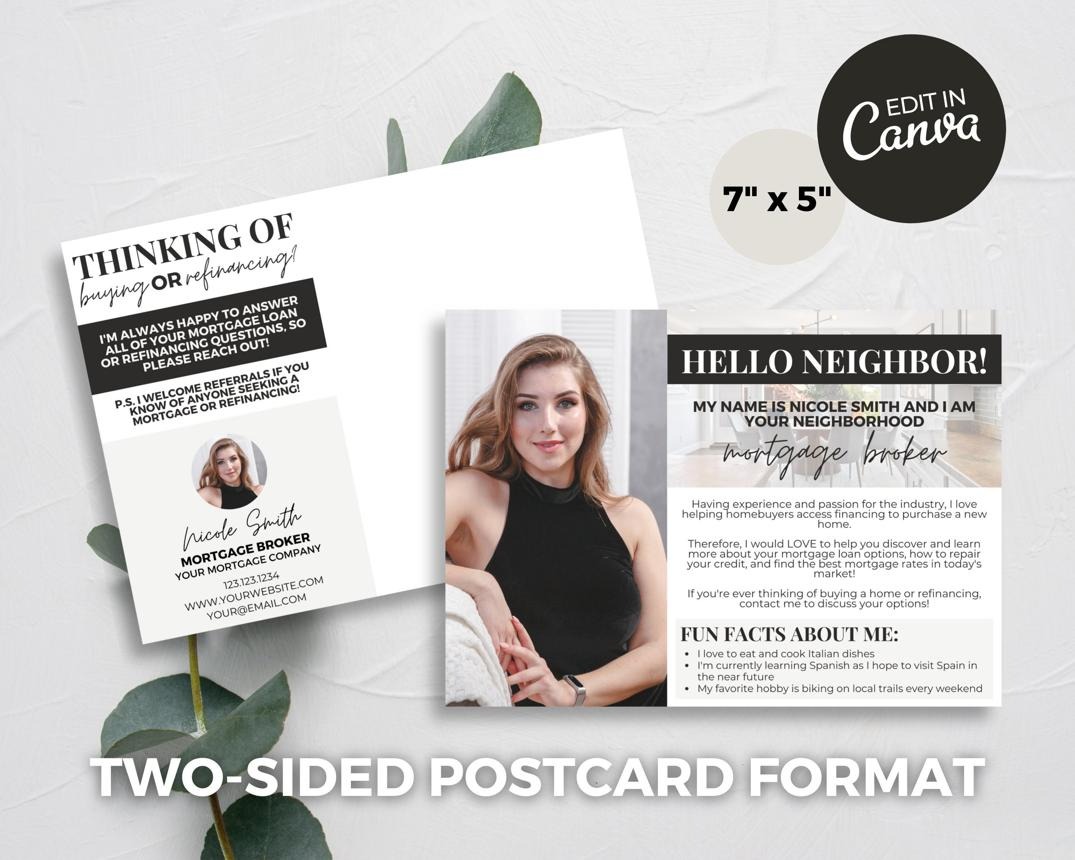
Build the message around a genuinely relevant local audience. A campaign in a community with many existing homeowners might emphasize renewal preparation, while a campaign associated with a new residential development might focus on financing considerations for buyers.
10. Mortgage broker introduction flyer

Introduce the licensed professional, their services, service area, and approach to helping borrowers. Include authentic credentials and verifiable information. A short explanation of the consultation process can be more persuasive than unsupported claims about being the best broker in the area.
These concepts can also be adapted into digital advertisements, website banners, downloadable resources, and community event materials. Maintaining a consistent message across channels helps recipients recognize the business when they encounter it again.
Mortgage Broker Marketing Flyers: Choosing the Right Format
The physical format influences how much information a flyer can contain, how it is distributed, and what action the recipient is likely to take.
A small postcard can be effective for one clear message, while a folded brochure provides additional space for explaining a service. Neither format is automatically better. The choice should depend on the communication objective.
| Flyer format | Suitable purpose | Key consideration |
| Postcard | Renewal reminders, introductions, local awareness | Keep the message short and action-oriented |
| Single-page flyer | Workshops, homebuyer guides, refinancing awareness | Maintain a clear visual hierarchy |
| Bi-fold brochure | Service explanations and consultations | Organize information into distinct sections |
| Trifold brochure | Multiple services and educational information | Avoid overcrowding individual panels |
| Digital PDF | Email attachments, downloads, and referral resources | Ensure readability on mobile devices |
How to Structure Mortgage Broker Trifold Marketing Flyers
Trifold brochures can be useful when a mortgage professional needs to explain several related topics without creating an excessively long document.
A typical trifold contains six panels, including the front and back covers. Each panel should have a clear function.
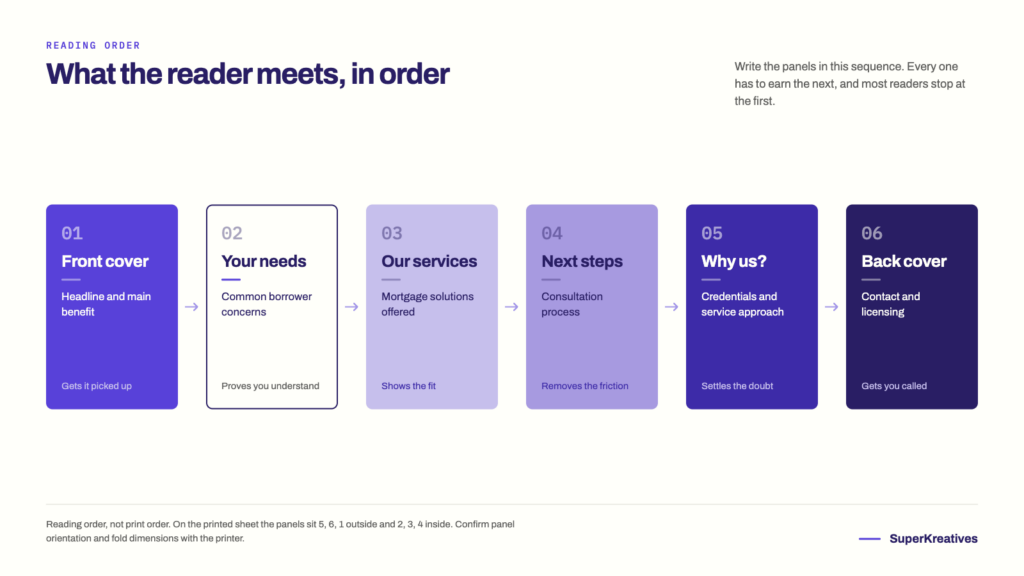
The front cover should immediately communicate the brochure’s purpose. Inside panels can introduce the borrower’s situation, explain the relevant services, and describe how the consultation process works.
The back cover can provide contact information, licensing details, and a clear next step.
For a mortgage renewal brochure, one panel might address questions homeowners should ask before renewing. Another could explain switching lenders, while a third discusses possible costs and qualification considerations.
This approach provides genuine educational value while keeping the brochure focused.
Before printing, request a physical proof. Folded materials can contain alignment issues, particularly when the designer assumes every panel has identical dimensions. Some folding methods require one panel to be slightly narrower.
Creative Marketing Ideas for Mortgage Loan Officers
The term mortgage loan officer is especially common in the United States, although Canadian financial institutions also employ mortgage specialists and other lending professionals. In Canada, the professional’s permitted title and responsibilities depend on their employer and applicable regulatory framework.
The underlying marketing principle remains the same: useful information should reach borrowers at the point where they need it.
For mortgage loan officer marketing flyers, the message can be organized around specific customer situations rather than broad product advertising.
A lender representative working with first-time buyers may create a document explaining the home financing process. Someone supporting existing mortgage customers may provide educational material on renewal preparation.
A professional serving business owners could develop information about the documentation lenders may request from self-employed applicants.
Another creative approach is to connect print materials with an educational event. For example, a small flyer could invite prospective homeowners to a local session about budgeting for a first property. It should explain what attendees will learn and avoid making the event appear to offer personalized financial advice without an appropriate assessment.
Loan officers working for financial institutions should follow their employer’s advertising approval process, brand policies, and applicable legal requirements. Independently produced materials may require review before distribution.
How to Design Reverse Mortgage Marketing Flyers Responsibly
Reverse mortgage advertising deserves particular care because it can influence significant financial decisions involving older homeowners and accumulated home equity.
In Canada, reverse mortgages are generally available to eligible homeowners aged 55 or older. The Financial Consumer Agency of Canada explains that reverse mortgages allow qualifying homeowners to access part of their home equity without selling their property. However, interest accumulates, costs may be higher than those of traditional borrowing options, and the outstanding balance usually increases over time.
A responsible flyer should explain these considerations rather than focus exclusively on accessing money.
What to Include in a Reverse Mortgage Flyer
Start with a neutral, informative headline. For example, “Exploring Ways to Access Your Home Equity After 55?” introduces the subject without implying the product is suitable for everyone.
The supporting content should explain that eligibility depends on factors such as age, property value, the property itself, and lender requirements.
Important information includes the possibility of higher borrowing costs, the accumulation of interest, repayment conditions, and the effect a reverse mortgage may have on remaining home equity and an estate.
Readers should also understand that other options may be available, including downsizing, a conventional mortgage, or a home equity line of credit, depending on their circumstances.
Use legible typography, plain language, and sufficient spacing. Do not use fear-based messages suggesting that seniors must act immediately to protect their home or financial security.
What to Avoid in Reverse Mortgage Advertising
Claims such as “Free Money From Your Home” or “No Costs, No Payments, No Worries” can create seriously misleading impressions.
Although reverse mortgages generally do not require regular mortgage payments, they are loans with interest and associated obligations.
Avoid promising universal eligibility or implying the product carries no financial consequences. Do not use unverified testimonials, fabricated retirement stories, or exaggerated benefits.
The objective should be to help homeowners decide whether seeking further information is worthwhile, not pressure them into a complex financial product.
Where to Find Free Mortgage Marketing Materials
Independent brokers and small mortgage teams may not have large design budgets. Fortunately, several tools can help produce basic promotional materials without commissioning every design from scratch.
Canva
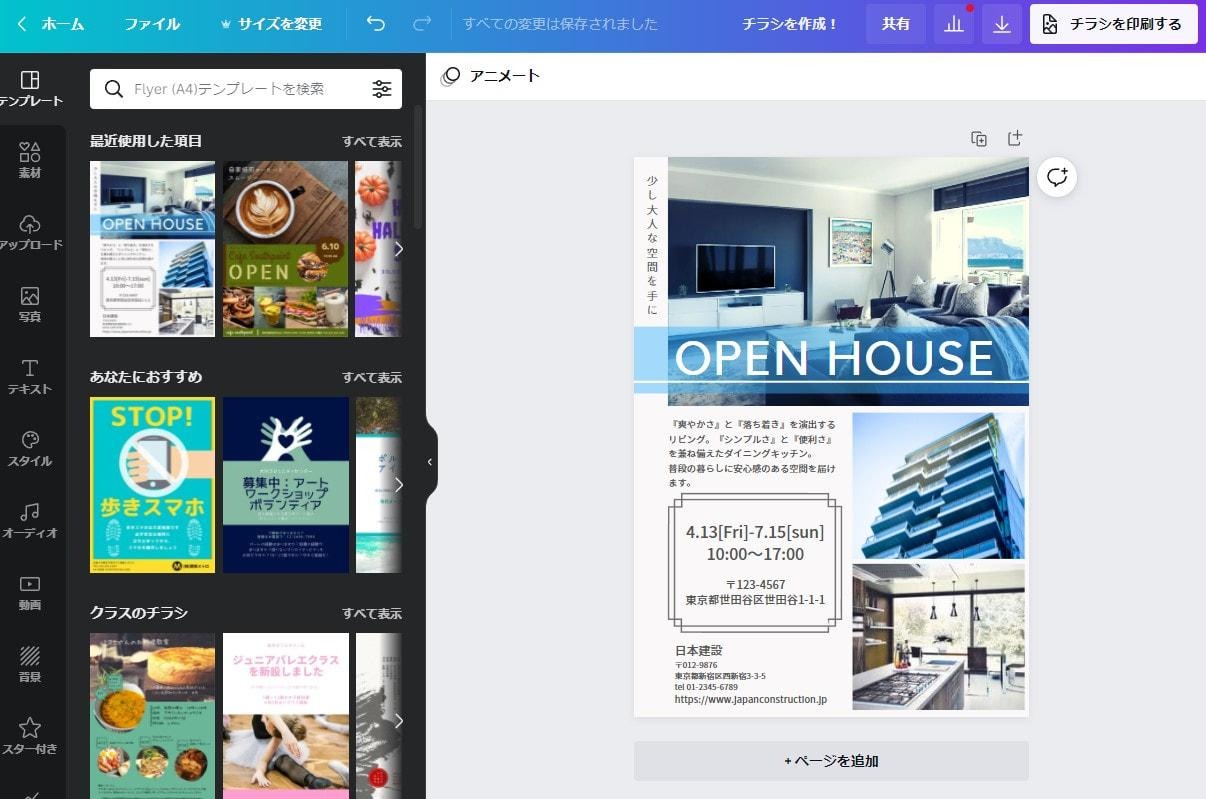
Canva provides editable design templates that can be adapted for brochures, flyers, postcards, and other promotional materials. Free design features may be sufficient for straightforward projects, although particular templates, graphics, and export options may require a paid plan.
Adobe Express
Adobe Express offers accessible design tools for producing marketing graphics and print materials. It can be useful for adapting a consistent brand identity across flyers and digital campaigns. Check individual asset licensing and subscription restrictions before commercial use.
Microsoft PowerPoint
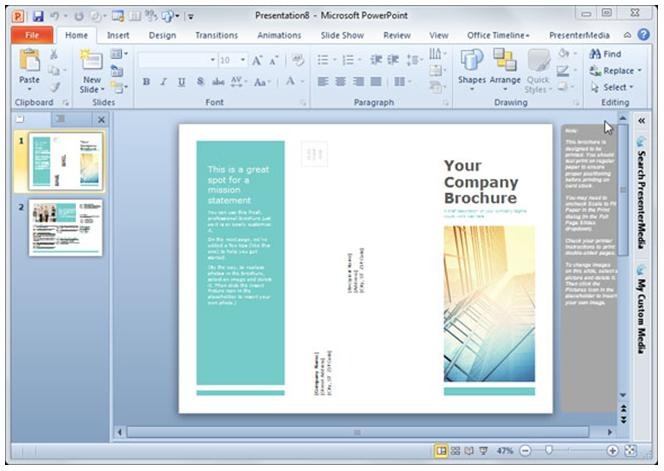
PowerPoint can also be used to create simple flyers by setting appropriate page dimensions, arranging text and images, and exporting the layout for review or printing. It is particularly practical for teams already familiar with Microsoft Office.
Free templates should be treated as starting points rather than finished advertisements.
A generic mortgage design may contain American terminology, placeholder interest rates, inappropriate licensing information, or unrealistic financial promises. All of these need to be replaced or reviewed before Canadian publication.
Visual consistency also matters. Maintain the same brand colours, professional details, contact information, and typography across different materials so that recipients can recognize the business.
How to Write Mortgage Flyer Copy That Encourages Enquiries
Design attracts attention, but the written message determines whether the recipient understands the offer.
A simple and useful copywriting structure involves four stages: identify the situation, explain its relevance, establish what assistance is available, and provide a next step.
Consider this sample for a mortgage renewal campaign.
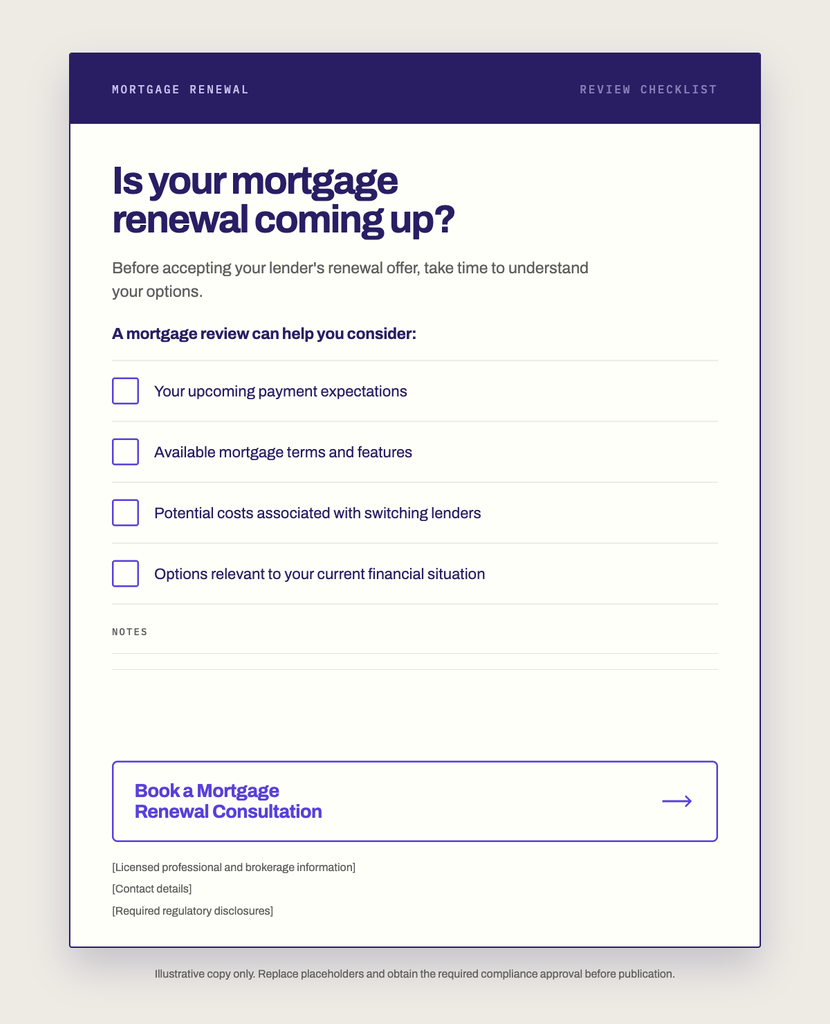
This copy works as a model because it explains the subject without relying on exaggerated claims. It gives the reader several reasons to review their circumstances and identifies the next step.
A refinancing campaign would require different wording. It might encourage homeowners to evaluate whether refinancing costs outweigh potential benefits.
For first-time buyers, the headline should acknowledge the need to understand borrowing requirements rather than promote a specific interest rate without context.
The core rule is simple: one flyer, one primary audience, one meaningful message, and one clear next action.
How to Distribute Mortgage Marketing Flyers Across Canadian Communities
Designing a flyer is only half the process. Distribution determines whether the material reaches an appropriate audience.
A mortgage broker operating in Toronto, for example, should not automatically distribute the same flyer across every available postal code. Different neighbourhoods can have different housing characteristics and borrower needs.
A more effective approach begins by identifying the intended audience and selecting distribution channels accordingly.
Canada Post Neighbourhood Mail
Canada Post’s Neighbourhood Mail service allows businesses to organize direct mail campaigns by geographic area and selected audience characteristics.
Mortgage professionals can use this to plan campaigns within their actual service regions rather than relying on unrestricted distribution.
For example, a brokerage offering mortgage renewal services may choose established residential communities for a general homeowner awareness campaign. A first-time buyer information campaign could be promoted alongside relevant local educational events.
These targeting decisions should be treated as hypotheses to test, not guarantees that residents need a particular mortgage product.
Real Estate Offices and Community Events
With permission, brokers can distribute educational brochures through appropriate professional partnerships and community events.
A trifold brochure explaining the home financing process may complement a first-time homebuyer seminar. An introductory flyer could also be made available during approved networking or industry events.
Any co-branded promotion should identify the participating businesses accurately and comply with applicable referral and advertising requirements.
Digital Distribution of Mortgage Flyers
A print-ready flyer can often be adapted into a downloadable PDF, social media graphic, or landing page resource.
However, resizing a printed design for Instagram or Facebook is not always sufficient. Smaller screens require larger text, simplified layouts, and fewer competing visual elements.
If a flyer is distributed through promotional emails or text messages, Canada’s Anti-Spam Legislation may apply. Commercial electronic messages generally require an appropriate consent basis, identification information, and an unsubscribe mechanism, subject to applicable exceptions.
Treat digital distribution as a separate campaign channel with its own audience, design requirements, and compliance checks.
How to Measure the Performance of Mortgage Flyers
One disadvantage of traditional print marketing is that results can be difficult to attribute when every campaign uses the same phone number and generic website address.
This problem can be reduced by connecting each flyer campaign to a measurable digital action.
Use a dedicated landing page, campaign-specific QR code, or identifiable enquiry source so that responses can be associated with the appropriate distribution.
Canada Post also identifies QR codes as a practical way of connecting direct mail recipients with digital destinations.
Consider a hypothetical campaign distributing 5,000 flyers in a selected community.
| Performance metric | Example result |
| Flyers distributed | 5,000 |
| Printing and distribution cost | $1,250 |
| Tracked landing page visits | 120 |
| Enquiries received | 15 |
| Qualified consultations | 6 |
| Cost per enquiry | $83.33 |
| Cost per qualified consultation | $208.33 |
These numbers are illustrative, not industry benchmarks.
The campaign may appear successful when judged only by enquiries. However, the brokerage should also track how many consultations progress into mortgage applications and funded transactions.
Even these calculations have limitations. A person who receives a flyer may contact the broker later through an ordinary Google search, making the original source difficult to identify.
For this reason, combine digital attribution with a simple enquiry question asking how the borrower first heard about the business.
Use a Simple Framework Before Spending More
At SuperKreatives, our preferred approach is to evaluate print campaigns through four connected questions:
- Audience: Did the material reach people reasonably likely to need the advertised service? Review geographic targeting and the actual relevance of the campaign.
- Message: Did recipients understand the problem and the value of contacting the professional? Examine the headline, supporting information, and offer.
- Response: Did the flyer produce measurable interest? Track QR code visits, enquiries, telephone calls, and consultation requests.
- Outcome: Did those enquiries create suitable business opportunities? Review qualification, appointments, applications, and completed transactions.
If response volume is low, the audience or message may require adjustment. If enquiries are plentiful but few lead to consultations, the landing page, expectations, or enquiry handling may need improvement.
Print more materials only after identifying what the first campaign has demonstrated.
Common Mistakes to Avoid With Mortgage Loan Officer Marketing Flyers
Even professionally designed materials can underperform when basic marketing considerations are overlooked.
Overcrowding the layout: A flyer containing several interest rates, long service descriptions, numerous testimonials, and multiple calls to action can become difficult to understand. Prioritize the most relevant information.
Using generic stock messaging: Phrases such as “We Make Your Dreams Come True” do not explain a specific mortgage service or why borrowers should contact you.
Promising unrealistic outcomes: Guaranteed approvals, universal savings, or claims that everyone qualifies can mislead consumers. Mortgage eligibility and suitability depend on individual circumstances and lender requirements.
Ignoring Canadian regulations: Do not reuse American mortgage promotional templates without reviewing terminology, claims, and licensing disclosures. Mortgage marketing requirements also vary across Canadian provinces.
Printing without proofreading: Check telephone numbers, QR codes, links, spelling, design margins, accessibility, and the accuracy of all advertised information before authorizing a print run.
Failing to track results: Without an attribution process, the business may know how many flyers were distributed but have no reliable basis for evaluating their contribution to enquiries or revenue.
A short compliance review and a small test campaign can prevent avoidable financial and reputational costs.
Final Thoughts: Turn Mortgage Flyers Into a Measurable Marketing Channel
Effective mortgage marketing flyers combine relevant borrower information, professional design, accurate financial communication, and a clear next step.
For Canadian mortgage brokers, lenders, and mortgage professionals, the opportunity is not simply to reach more households. It is to reach the right communities with messages that reflect genuine mortgage-related needs.
A renewal flyer should help homeowners understand what to review. A first-time buyer brochure should answer important financing questions. A reverse mortgage flyer should explain both potential benefits and financial considerations.
When these materials connect with useful landing pages, trackable enquiries, and a reliable follow-up process, print advertising becomes part of a broader customer acquisition system rather than an isolated promotional expense.
At SuperKreatives, we believe mortgage marketing should be evaluated by the quality of the opportunities it creates, not merely the number of materials distributed. Start with the borrower’s needs, communicate clearly, test distribution carefully, and use actual campaign results to guide future investment.
Frequently Asked Questions
Do mortgage marketing flyers still work in Canada?
They can be useful for building local awareness, promoting educational services, and introducing mortgage professionals to homeowners. Their effectiveness depends on the audience, message, distribution method, and follow-up process. Flyers are generally most useful when integrated with a broader digital and relationship-based marketing strategy.
What should mortgage broker marketing flyers include?
A mortgage flyer should include a relevant headline, clear service information, an appropriate call to action, accurate contact details, and required licensing disclosures. It should avoid misleading claims and use readable, professional design elements.
Where can I get free mortgage marketing materials?
Tools such as Canva and Adobe Express provide free design capabilities and some templates that may be suitable for mortgage-related materials. Mortgage professionals can also create simple layouts using software they already have access to. Templates should be customized and checked for Canadian regulatory compliance before publication.
Are mortgage broker trifold marketing flyers better than postcards?
Neither format is universally better. Postcards are useful for focused messages and brief reminders, while trifold brochures provide more space for educational information or explaining multiple related services. The appropriate format depends on the campaign’s purpose and how the material will be distributed.
What are some creative mortgage marketing ideas for new brokers?
New brokers can develop first-time buyer checklists, renewal information cards, educational seminar flyers, neighbourhood introduction postcards, and service-specific brochures. Each concept should address a recognizable borrower question rather than relying exclusively on promotional offers.
How can mortgage flyers generate more qualified leads?
Focus on a defined borrowing situation, direct readers to a relevant landing page, and clearly explain what happens after an enquiry. Use trackable QR codes or campaign-specific contact options, then review how many enquiries progress into suitable consultations rather than measuring flyer distribution alone.
Are reverse mortgage marketing flyers allowed in Canada?
Reverse mortgage advertising is permitted, subject to applicable regulatory and advertising requirements. Materials must not mislead consumers about eligibility, costs, repayment obligations, or risks. Clear explanations and appropriate professional review are especially important when communicating complex home equity borrowing products.
How often should mortgage brokers distribute flyers?
There is no universally effective distribution frequency. Begin with a limited campaign, evaluate the response, and determine whether additional distribution is justified. Repeatedly delivering similar advertisements without learning from earlier results may increase expenses without meaningfully improving enquiries.