A homeowner approaching mortgage renewal might spend weeks researching interest rates, switching lenders, and possible changes to monthly payments before contacting a mortgage professional. A first-time buyer could watch several financing videos, read an article about down payments, and compare mortgage options before deciding whom to trust.
These borrowers are already making decisions long before they submit an enquiry. The question is whether your mortgage business is providing the information they need during that process.
Content marketing helps mortgage brokers become part of those early conversations. Instead of relying entirely on advertising or referrals, brokers can use informative articles, videos, newsletters, guides, and educational resources to demonstrate expertise and help borrowers understand their financing options.
However, producing content consistently requires more than writing occasional blog posts. It involves understanding borrower questions, choosing relevant topics, maintaining financial accuracy, distributing information effectively, and evaluating whether those efforts create meaningful business opportunities.
This guide explores practical content strategies for Canadian mortgage professionals, the best content marketing tools for mortgage brokers, and how to build a sustainable content system that supports search visibility, qualified enquiries, and long-term client relationships.
Why Content Marketing Matters for Canadian Mortgage Brokers
Mortgage financing is not a routine purchase. Borrowers are making decisions that can influence their household budgets, financial flexibility, and long-term obligations.
Before approaching a lender or broker, many consumers want to understand how mortgage qualification works, what happens during renewal, which financing options might be available, and what costs they should consider.
A mortgage business that answers these questions clearly creates an opportunity to earn attention before the borrower is ready to schedule a consultation.
Consider two mortgage broker websites competing in the Greater Toronto Area.
The first website contains a homepage, a contact page, and a brief description of its services. The second provides clear information about first-time homebuyer financing, mortgage renewals, refinancing costs, and common qualification concerns.
When someone searches for information about switching lenders during renewal, the second website has a relevant resource that may meet their immediate need.
That doesn’t guarantee higher search rankings or a new client. It does, however, create another meaningful opportunity for discovery and engagement.
Content marketing also supports relationships beyond the original mortgage transaction. A homeowner who found an educational article helpful during their first purchase may return when they have questions about refinancing or renewal.
At SuperKreatives, we view content as part of a broader customer acquisition and retention system. Its purpose should be to answer real questions, establish credible expertise, and make appropriate next steps accessible.
Content Marketing Is Different From Direct Advertising
Advertising generally aims to place a message in front of a selected audience. Content marketing gives people a reason to engage with the business voluntarily.
For example, an advertisement might encourage homeowners to book a mortgage renewal consultation.
An educational article could instead explain how renewal offers work, what borrowers should compare, and why switching lenders may involve additional considerations.
Both can support the same business objective, but they address different stages of the decision-making process.
Content is particularly useful when a borrower needs information before becoming comfortable enough to initiate contact.
The strongest mortgage marketing systems combine these approaches rather than treating educational content and advertising as unrelated activities.
Understanding the Canadian Mortgage Audience Before Creating Content
One of the most common content marketing mistakes is assuming that every mortgage prospect is looking for the same information.
A first-time buyer in Calgary may be concerned about down payment preparation and closing expenses. A homeowner in Vancouver approaching renewal may want to understand payment changes. Someone refinancing a property in Toronto could be comparing borrowing costs, penalties, and available options.
These situations require different explanations.
Before developing an editorial calendar, divide potential readers into groups based on their mortgage needs.
| Audience | Common questions | Appropriate content |
| First-time buyers | How much down payment is required? What is pre-approval? | Buyer guides, checklists, explanatory videos |
| Renewing homeowners | Should I accept my renewal offer? Can I switch lenders? | Renewal articles, comparison guides, newsletters |
| Refinancing borrowers | What will refinancing cost? When does it make sense? | Cost explainers, decision frameworks |
| Self-employed applicants | What income documents may lenders require? | Documentation guides and qualification explainers |
| Property investors | What financing factors apply to rental properties? | Investment property mortgage education |
| Professional referral partners | What financing issues can affect transactions? | Webinars, process guides, professional articles |
This segmentation helps the brokerage select subjects that reflect its actual services.
A business specializing in first-time homebuyers does not need to publish extensively about every available mortgage product. Its initial priority should be answering the questions most relevant to the borrowers it can appropriately assist.
Match Content to Borrower Intent
Borrower intent describes what someone is trying to accomplish when searching for information.
Someone searching “what is mortgage pre-approval” is probably seeking an explanation. A person searching “mortgage broker in Ottawa” may be looking for professional assistance.
A search about refinancing penalties suggests a different stage of consideration.
Content should reflect these differences.
Educational articles are suitable for information-seeking audiences. Service pages should explain the assistance provided by the brokerage. Comparison resources can support readers evaluating different options.
Do not attempt to convert every informational topic into an aggressive sales page. Doing so can make the content less useful and weaken the credibility it is supposed to establish.
How to Build a Mortgage Content Marketing Strategy
A sustainable content strategy connects audience needs with business objectives.
Publishing four blogs, eight social posts, and two videos each month means little if the subjects are unrelated or fail to address meaningful borrower questions.
A better approach begins with a manageable set of topics, each connected to an actual service or borrower concern.
Establish Core Mortgage Content Categories
Start with the services the brokerage genuinely offers.
For a typical Canadian mortgage business, relevant categories may include first-time homebuyer financing, mortgage renewals, refinancing, self-employed mortgages, and investment property financing.
Each category can support several educational subjects.
For example, mortgage renewals can include articles explaining how renewal offers work, the differences between renewing and refinancing, when borrowers should begin preparing, and what switching lenders may involve.
These related pieces form a useful content collection.
A reader who begins with a general renewal guide can explore a detailed article about switching lenders when they need more information.
This structure also creates natural internal linking opportunities.
Build Content Around Questions, Not Keywords Alone
Keyword research is useful for understanding how people search, but it should not determine every editorial decision.
A keyword with a promising search volume may be irrelevant if the brokerage doesn’t provide the associated service.
Conversely, a question that receives relatively little search traffic may be highly valuable when it reflects a concern commonly raised by qualified prospects.
For instance, a broker who frequently helps self-employed applicants may find value in explaining why different lenders assess self-employment income differently.
The content should address the underlying question thoroughly rather than repeat an exact keyword simply to achieve a particular density.
Google’s Search Central guidance emphasizes original, useful, people-first content and encourages publishers to consider whether readers leave with enough knowledge to achieve their purpose.
For mortgage businesses, this means accuracy, completeness, and practical relevance should guide production.
Create Different Content for Different Decision Stages
Not every article needs to ask the reader to book a consultation.
Early-stage content should establish understanding. Mid-stage content can help readers compare considerations and recognize when professional advice may be useful. Service-oriented content should explain what working with the brokerage involves.
For example, a first-time buyer might encounter an article about minimum down payment requirements, later read a guide to mortgage pre-approvals, and eventually visit a page describing consultation services.
The objective is to make relevant information accessible throughout the journey without assuming the reader is immediately ready to apply.
Best Content Marketing Tools for Mortgage Brokers: What Should You Actually Use?
A useful mortgage content marketing system does not require dozens of subscriptions.
Most brokerages need reliable tools for research, content production, design, publishing, distribution, and performance measurement.
The objective is to choose software that solves a specific operational problem, not to assemble the largest possible marketing technology stack.
The following tools are worth evaluating based on their documented capabilities and relevance to mortgage content workflows.
1. Semrush: Topic and Keyword Research
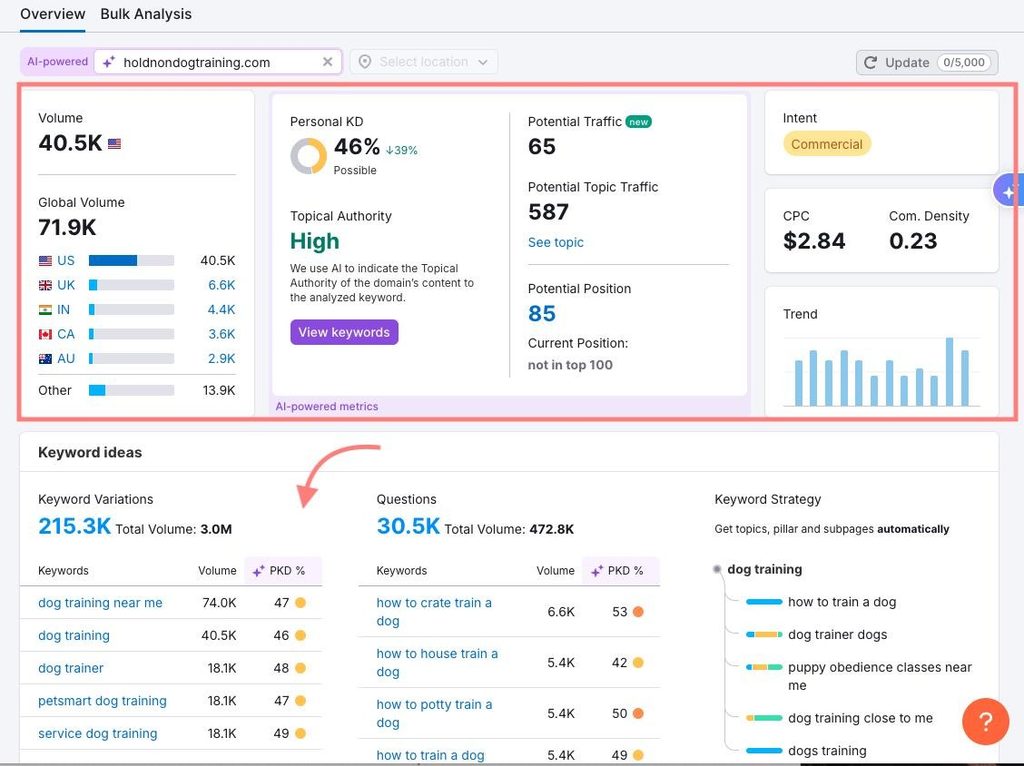
Semrush supports keyword analysis, competitor research, and content topic discovery. Its Topic Research features can help identify related subjects and questions, while its SEO tools help assess search opportunities.
A Canadian mortgage brokerage might use it to investigate related searches about refinancing costs, renewal options, or first-time buyer preparation. Search location and intent should be reviewed carefully before choosing topics.
2. Google Search Console: Organic Search Performance
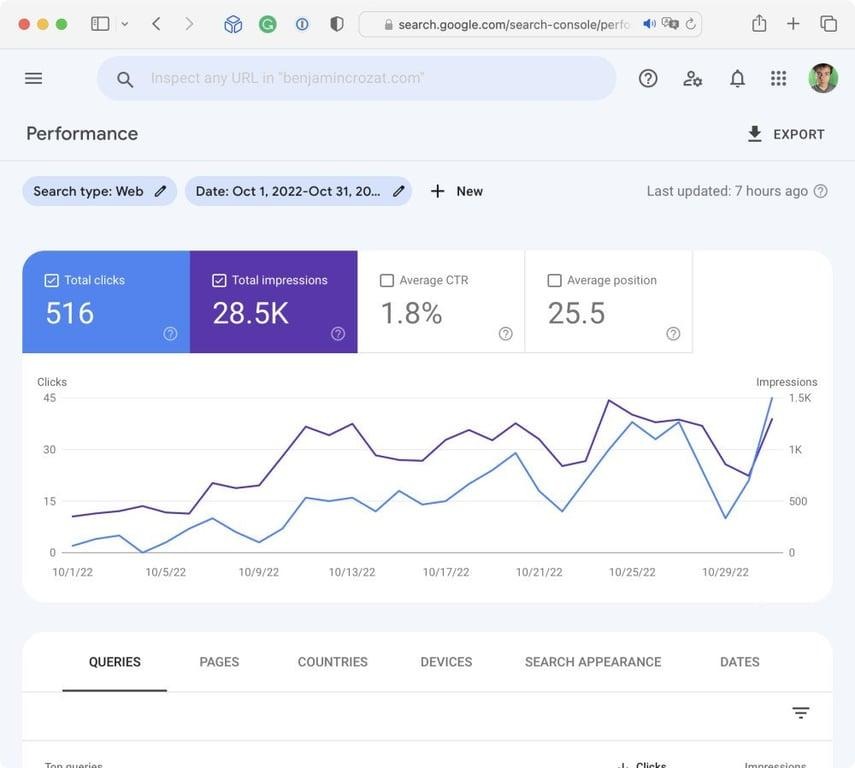
Google Search Console provides information about the search queries generating impressions and clicks, the pages appearing in Google Search, and their performance over time.
It can help identify existing articles that need improvement. For instance, a renewal guide may be receiving impressions for related borrower questions that the current article does not answer sufficiently.
3. Canva: Visual Content Creation

Canva can help create mortgage infographics, educational carousels, checklists, and simple video graphics. Its Content Planner also supports scheduling to eligible connected social accounts, with availability depending on the account and platform.
For mortgage businesses, consistent visual templates are useful, provided they allow adequate space for accurate explanations and required disclosures.
4. WordPress: Blog Publishing
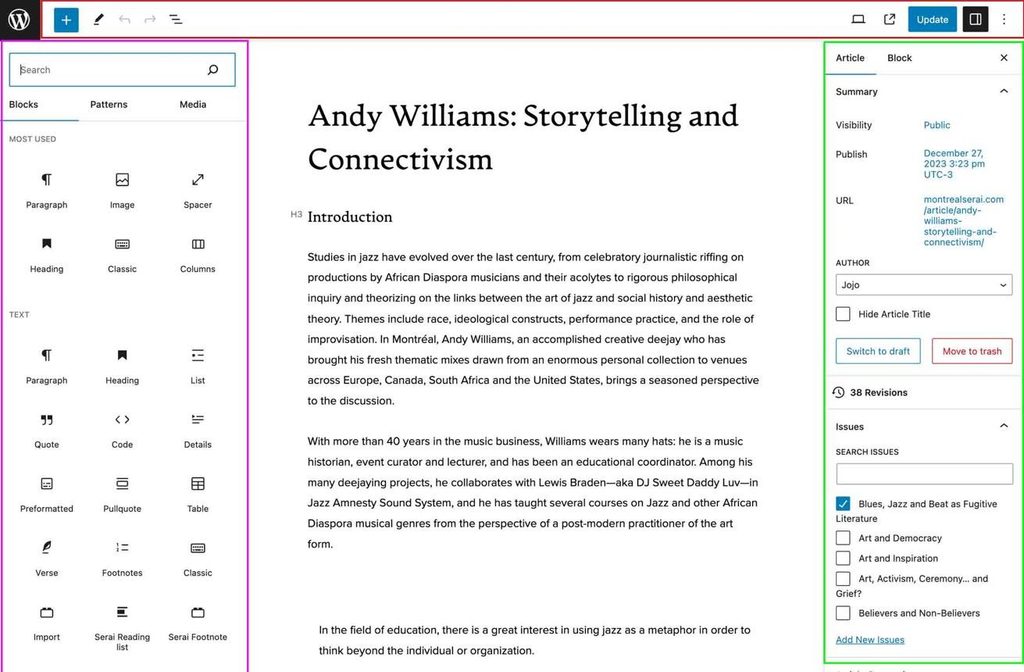
WordPress can serve as the publishing foundation for an independent mortgage brokerage website. It allows teams to create service pages, organize blog categories, add internal links, and manage editorial drafts.
Its effectiveness depends on the website’s technical setup, editorial process, security, hosting, and maintenance. A CMS alone does not guarantee search visibility.
5. HubSpot: Lead Nurturing and Distribution
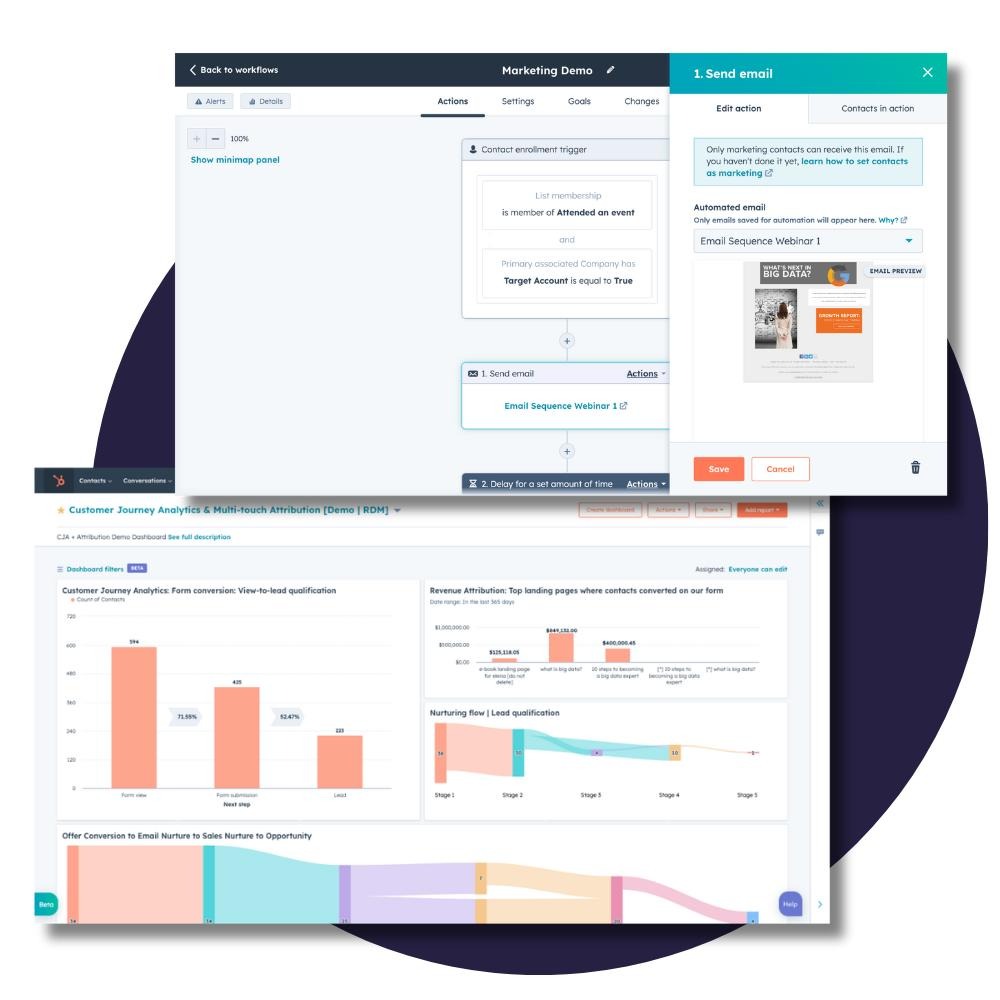
HubSpot combines CRM and marketing capabilities that can support segmented email communication and contact workflows. Certain advanced automated email functions require specific Marketing Hub subscriptions.
A brokerage could use appropriately consented newsletters to distribute educational content about mortgage renewals or home financing. Sensitive loan application data should remain in suitably secured, authorized systems.
6. Microsoft Clarity: Content Engagement Analysis
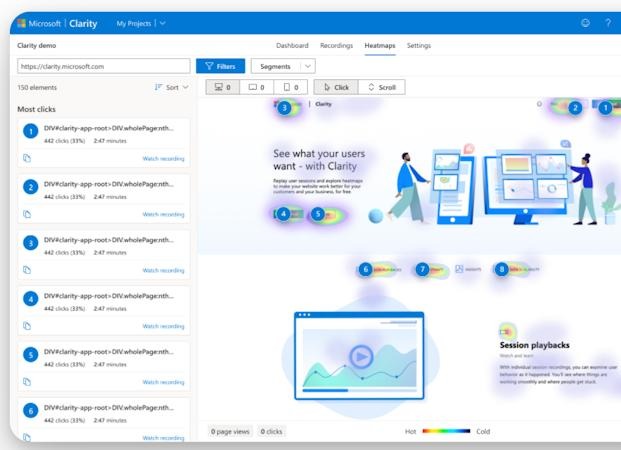
Microsoft Clarity provides heatmaps and session recordings that can help website owners understand how visitors interact with pages. These features can reveal scrolling behaviour and navigation friction.
For example, a broker may discover that readers rarely reach a consultation link near the bottom of an article. That finding could justify testing a more accessible, contextually appropriate call to action.
How to Choose the Right Content Marketing Stack
The ideal selection depends on the brokerage’s scale and operational maturity.
A solo mortgage agent with a small website could begin with Google Search Console, a reliable publishing system, and a design tool. This provides a foundation for creating and evaluating content without unnecessary complexity.
A growing brokerage managing multiple content categories may benefit from dedicated keyword research software, a structured publishing calendar, and CRM-connected distribution.
A larger organization may require additional approval workflows, staff permissions, document version control, and compliance records.
Before purchasing software, evaluate whether the team can actually use it consistently.
A sophisticated research platform contributes little value if nobody reviews the findings. Likewise, an automation platform cannot solve poor contact records or unclear editorial responsibilities.
Our preferred approach at SuperKreatives is to organize tools around the workflow rather than reorganizing the business around every new product.
How to Create a Mortgage Marketing Blog That Attracts Relevant Readers
A mortgage marketing blog should function as an organized educational resource, not a collection of unrelated articles published solely to target keywords.
Readers should be able to move logically between subjects and understand how different mortgage decisions connect.
Build Topic Clusters Around Mortgage Services
A topic cluster consists of a central resource supported by narrower articles that explore related questions.
For example, a comprehensive guide about mortgage renewals can introduce the renewal process, relevant timelines, lender options, and important financial considerations.
Supporting articles can then explain specific subjects in greater detail, such as:
- Switching lenders during renewal: Explain qualification considerations, potential costs, and the differences between switching and simply accepting a renewal offer.
- Fixed versus variable renewal options: Discuss how mortgage terms and interest structures may affect payment expectations and financial flexibility.
- Preparing before maturity: Explain which questions borrowers should review before their mortgage term expires.
Each supporting article should have a distinct purpose. Publishing several pages that answer essentially the same question with slightly different keywords can create unnecessary duplication.
The main article can introduce the broader subject and link to the more detailed resources when readers need additional explanations.
Make Mortgage Articles Useful Enough to Stand Alone
A strong mortgage blog article should answer the central question without requiring readers to open five other websites simply to understand the basics.
Consider an article about mortgage refinancing costs.
It should explain what refinancing means, why homeowners consider it, what types of expenses may arise, and how the total cost can influence the decision.
It should also acknowledge that refinancing isn’t necessarily beneficial for every borrower.
A page that only describes possible monthly payment reductions would provide an incomplete picture.
Internal links should deepen the reader’s understanding, not compensate for missing essential information.
Include Realistic Canadian Mortgage Scenarios
Practical explanations often make financial subjects easier to understand.
Suppose a homeowner is considering refinancing to consolidate debts. A hypothetical example could show why comparing monthly payments alone is insufficient and why the total borrowing cost, repayment period, fees, and mortgage penalties matter.
The example must clearly identify its assumptions and avoid suggesting that the outcome applies universally.
Similarly, when explaining mortgage qualification, the content should recognize that lender policies and borrower circumstances can influence eligibility.
This type of context helps readers understand how financial decisions work without presenting general educational information as personalized mortgage advice.
Keep Articles Accurate as Mortgage Rules Change
Mortgage content requires ongoing review because interest rates, qualification requirements, government programmes, and lender policies can change.
An article explaining the mortgage stress test should be checked against current applicable requirements. A guide discussing first-time homebuyer programmes should identify eligibility conditions and the period for which the information is accurate.
A practical editorial record should include the date of the last substantive review, the source of any time-sensitive claim, and the person responsible for checking changes.
Updating a page should mean correcting or improving its actual information, not merely changing its displayed publication date.
Content Marketing for Mortgage Lenders: Different Products, Different Priorities
Although mortgage brokers and lenders operate within the same industry, they do not always have identical content marketing objectives.
A mortgage broker may create resources explaining how borrowers can navigate financing options and what professional assistance involves.
A lender often needs to explain the features, terms, documentation requirements, and eligibility criteria of its own products.
This distinction matters when developing content.
For example, a lender offering a particular mortgage programme may publish an educational guide about who the programme is designed for, which documentation may be necessary, and what limitations apply.
Brokerages working with multiple lending partners may focus more broadly on helping borrowers understand the considerations involved in choosing between available financing arrangements.
Consumer Education for Mortgage Lenders
Consumer-facing content should provide accurate product information without implying that a particular mortgage is suitable for everyone.
An article about a five-year fixed-rate mortgage can explain how the term works, what rate stability means, and which contractual features borrowers should review.
It should also clarify that an advertised rate may depend on eligibility, product conditions, and other requirements.
The objective is to support informed consideration rather than disguise product advertising as neutral financial education.
Professional Content for Broker Relationships
Lenders working through broker channels may also benefit from educational material intended for mortgage professionals.
This could include documentation guides, policy explainers, training webinars, or practical information about application processes.
Such content can reduce misunderstandings and improve the quality of professional communication.
However, it must be aligned with current lender policies and reviewed by the appropriate internal teams.
How to Repurpose One Mortgage Article Into Multiple Content Formats
Mortgage businesses often struggle with publishing consistency because each platform appears to require entirely new content.
A more efficient approach is to research one useful topic thoroughly and adapt that information into several formats.
For example, a comprehensive article about mortgage renewal preparation could become an Instagram carousel explaining important questions, a short video about reviewing renewal offers, a LinkedIn post addressing professional referral considerations, and a newsletter linking to the complete guide.
The information should remain consistent, but the presentation should reflect the platform and audience.
An Instagram Reel may focus on one common misunderstanding, while the main article provides the complete explanation.
A newsletter can summarize the topic and direct interested readers toward the detailed resource.
Repurposing should not mean copying the same lengthy paragraph into every platform. Each format needs a distinct communication purpose.
(Image)
This system reduces duplicated research effort while improving consistency across channels.
It also creates a stronger connection between social media engagement and the brokerage’s owned website.
A Practical 90-Day Content Marketing Plan for Mortgage Brokers
Creating a content programme becomes easier when the work is divided into manageable stages.
The first 90 days should establish an editorial foundation, publish a focused collection of useful resources, and introduce a measurable distribution process.
| Period | Main priority | Recommended actions |
| Days 1–30 | Research and planning | Audit existing content, define borrower audiences, identify topic gaps, prioritize services, and establish review responsibilities |
| Days 31–60 | Content development | Publish relevant service-supporting articles, create educational visuals, establish internal links, and distribute approved content |
| Days 61–90 | Measurement and improvement | Review search visibility, engagement, enquiries, and content accuracy; improve underperforming resources |
During the first month, identify what the website already explains well and where borrowers are likely to encounter unanswered questions.
For example, if the brokerage has a service page about mortgage refinancing but no resource explaining prepayment penalties, that may represent a useful content opportunity.
The second month should concentrate on publishing a manageable number of thoroughly reviewed resources.
A smaller business might begin with two substantial articles each month and repurpose their key insights across its established communication channels. A larger brokerage could support a higher volume if it has the research, compliance, and editorial resources to maintain quality.
By the third month, use performance data to identify where improvements are needed.
An article receiving search impressions but few clicks may need a clearer title or better alignment with search intent. A page attracting relevant visitors but generating little engagement may need more useful explanations or improved navigation.
Content marketing generally requires sustained effort. Ninety days can provide useful early information, but it is not a guaranteed timeframe for meaningful organic rankings or mortgage lead generation.
Measuring Content Marketing Beyond Website Traffic
Website visits are important, but traffic alone does not establish commercial value.
A broad educational article might attract substantial readership while generating few suitable enquiries. Another article addressing a specific refinancing concern may attract fewer visitors but contribute more directly to consultation requests.
Both can be valuable, but they play different roles.
A practical measurement framework should connect content performance with the borrower’s journey.
| Metric | What it reveals |
| Organic impressions | Visibility within relevant Google searches |
| Organic clicks | Visitors arriving through search results |
| Engaged visits | Whether readers interact meaningfully with the page |
| Internal link activity | Whether readers explore related information |
| Consultation enquiries | Whether content leads to service-related interest |
| Qualified consultations | Whether enquiries match the brokerage’s services |
| Applications and funded mortgages | Downstream business outcomes where attribution is reliable |
Consider a hypothetical mortgage refinancing article receiving 800 organic visits in one month.
Of those visitors, 24 submit an enquiry, and six progress to suitable consultations.
That produces a 3% visitor-to-enquiry rate and a 25% enquiry-to-qualified-consultation rate.
These figures are illustrative, not industry benchmarks. Their value lies in showing how content measurement should progress beyond traffic volume.
The brokerage should also consider the article’s production cost, continuing maintenance requirements, and contribution to longer-term client relationships.
Not every useful article will lead directly to an enquiry. Some may influence a decision that occurs much later through another channel.
This is why content performance should be reviewed across multiple indicators rather than reduced to a single metric.
Canadian Mortgage Content Compliance and Editorial Accuracy
Financial services content requires careful review because misleading or incomplete information can influence significant borrowing decisions.
In Ontario, the Financial Services Regulatory Authority of Ontario (FSRA) states that public-facing mortgage materials must not contain false, misleading, or deceptive information. Its requirements also address brokerage identification, licence numbers, and the proper identification of individual brokers and agents.
These obligations can apply to website content and other marketing communications, not just paid advertisements.
Requirements differ across provinces and business models, so content intended for wider Canadian audiences needs appropriate jurisdictional review.
Establish a Mortgage Content Review Process
A practical review process should separate editorial quality from financial accuracy.
The writer is responsible for making the subject understandable. A qualified mortgage professional should verify lending explanations, product representations, and material financial claims. An appropriate authorized reviewer should check applicable advertising and compliance requirements.
Before publication, confirm that the article doesn’t promise guaranteed approvals, imply universal product eligibility, or present hypothetical examples as real borrower outcomes.
Where a discussion involves specific mortgage rules, government programmes, or lending rates, include trustworthy references and check that the information remains current.
Use AI Tools Without Sacrificing Accuracy
AI-assisted research, outlining, and drafting can improve production efficiency, but generated information should not be accepted without verification.
Mortgage rates, regulatory requirements, borrower eligibility, and lender policies are particularly sensitive to factual errors.
AI should not invent client testimonials, funded mortgage examples, professional credentials, or claims about a brokerage’s experience.
It should also not receive confidential borrower information through an unapproved system.
For Canadian mortgage professionals, the objective is a process where tools accelerate routine work while qualified people remain responsible for the published information.
Final Thoughts: Build a Content System That Helps Borrowers Make Better Decisions
Mortgage content marketing should not become an exercise in publishing as many articles or social media posts as possible.
Its value comes from addressing real borrower questions, explaining important financial considerations accurately, and helping potential clients recognize when professional assistance may be appropriate.
For Canadian mortgage businesses, a practical approach combines relevant topic research, comprehensive educational resources, thoughtful distribution, consistent updates, and measurable performance.
The right tools can make this process easier, but software cannot replace understanding the audience or maintaining reliable financial information.
At SuperKreatives, our approach is to connect content production with the broader mortgage customer journey. Educational resources should support discovery, strengthen credibility, and create natural pathways toward meaningful conversations.
Begin with the questions your ideal borrowers are already asking. Answer those questions with clarity and appropriate expertise. Build connections between related resources, and evaluate which content contributes to qualified enquiries and long-term relationships.
A strong mortgage content strategy doesn’t simply make a business more visible. It makes the business more useful to the people it wants to serve.
Frequently Asked Questions
What are the best content marketing tools for mortgage brokers?
Useful options include Semrush for research, Google Search Console for organic search performance, Canva for visual content, WordPress for publishing, HubSpot for marketing workflows, and Microsoft Clarity for website behaviour analysis. The best combination depends on the brokerage’s size, existing systems, budget, and content objectives.
How does content marketing help mortgage brokers generate leads?
Educational content can attract people researching mortgage questions and help them understand available considerations before seeking professional assistance. Relevant articles, videos, and guides can then connect readers with suitable service pages or consultation opportunities. Lead generation depends on content quality, visibility, audience relevance, and the enquiry process.
How often should a mortgage marketing blog publish new articles?
There is no universally effective publishing frequency. Two well-researched articles each month may be a manageable starting point for a small brokerage, while larger teams may have the resources to publish more. Accuracy, usefulness, and proper maintenance matter more than volume alone.
Is content marketing for mortgage lenders different from marketing for brokers?
Yes. Lenders generally create content focused on their own financing products, eligibility requirements, and lending processes. Mortgage brokers may emphasize borrower education, comparisons where appropriate, and professional guidance across the financing journey. Both require accurate information and compliance with applicable advertising requirements.
Should mortgage brokers use AI to write blog content?
AI can help organize research, prepare outlines, and develop draft material. However, mortgage-related claims should be verified using authoritative sources and reviewed by qualified professionals. AI-generated content should not replace subject expertise or invent lending outcomes and professional experiences.
How long does mortgage content marketing take to produce results?
Results vary with competition, website condition, content quality, distribution, and existing search visibility. Some improvements may become measurable within months, while competitive organic searches can take considerably longer. There are no guaranteed ranking or lead-generation timelines.
Which content topics should a new mortgage brokerage publish first?
Begin with subjects closely connected to the services the brokerage actually provides. First-time homebuyer guidance, mortgage renewal preparation, refinancing costs, and mortgage qualification explanations are possible starting points. The final priorities should reflect the intended audience, geographic market, and genuine demand for the services.
How can mortgage brokers measure whether content marketing is working?
Use Google Search Console and website analytics to assess organic visibility and engagement. Connect relevant enquiry forms, appointment requests, and CRM outcomes to content sources where possible. Qualified consultations and downstream business results provide more useful context than page views alone.